Partial Knee Replacement Surgeon in Nagpur

A Patient Guide to Unicompartmental Knee Replacement for Knee Arthritis by Dr. Ammol Kadu

What Is Partial Knee Replacement? Suitability, Procedure, Recovery and Risks

Dr. Ammol Kadu is an orthopedic surgeon in Nagpur who performs partial and total knee replacement. Knee arthritis is usually treated first with medicines, physiotherapy, weight management and injections. Surgery is considered only when these no longer control pain or daily function, with all risks explained.

Dr. Ammol Kadu

Orthopedic Surgeon and Joint & Bone Specialist

Partial vs Total Knee Replacement:
Key Differences to Understand

Smaller Incision Technique:

PKR is usually done through a shorter incision and removes less bone than total knee replacement. Some patients may have less blood loss, though it varies by person.

Mobilisation Timing:

Walking with support is usually started soon after surgery, as advised by the care team. Recovery pace varies by patient.

Natural Ligaments:

The cruciate ligaments and healthy cartilage are retained, which may help the knee feel more natural. PKR does not suit everyone, and results depend on arthritis severity, fitness and rehabilitation.
Best Orthopedic Doctor in Nagpur
Preoperative Assessment for Partial Knee Replacement in Nagpur

Knee Examination, X-rays and MRI Assessment Before PKR

Assessment covers your symptoms, walking and previous treatment, then a knee examination. Standing X-rays and, if needed, an MRI show whether arthritis is limited to one compartment and ligaments are stable.

Partial Knee Replacement surgery in Nagpur

Partial Knee Replacement Procedure

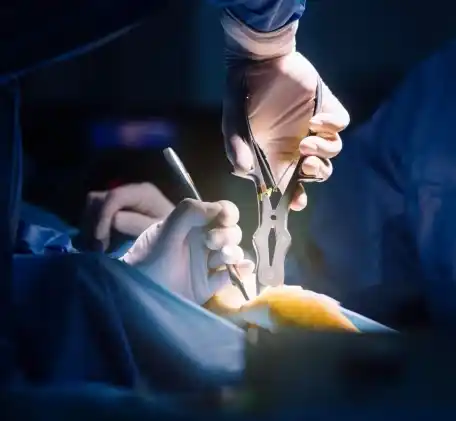
Under spinal or general anaesthesia, damaged bone and cartilage in one compartment are removed, and a partial knee implant is then fitted. The rest of the knee is left in place, and pain relief is given.

Quick Recovery After Knee Replacement in Nagpur

Recovery and Physiotherapy Post Surgery

Patients are usually helped to walk with support soon after surgery. Physiotherapy then helps rebuild strength and movement. Recovery time varies by patient, and regular follow-up visits check healing and the implant.
Best Orthopedic Surgeon in Nagpur

Partial Knee Replacement in Nagpur: Information on Consultation, Assessment and Treatments

Knee pain has many causes, and not everyone with knee pain needs surgery. Non-surgical treatment such as medicines, injections and physiotherapy is usually tried first. When these treatments no longer help, an orthopedic consultation can assess whether partial or total knee replacement, knee arthroscopy or non-surgical care is suitable. For a consultation, it helps to bring previous X-rays, MRI reports and a list of all current medicines. A consultation should cover the diagnosis, treatment options, expected recovery and possible risks. Like any surgery, partial knee replacement carries risks, and results vary from patient to patient. This page provides general education and is not a substitute for a personal medical examination. The clinic in Nagpur sees patients with knee arthritis, sports injuries, ligament and meniscus problems and fractures.

Frequently Asked Questions

How long does PKR surgery take and what is the hospital stay?

Partial knee replacement surgery usually takes one to two hours. Most patients stay in hospital for a few days, depending on their health, mobility and pain control. The doctor advises on discharge.

What is the cost of partial knee replacement in Nagpur?

The cost of partial knee replacement in Nagpur depends on the implant, hospital, room category, length of stay and tests. Health insurance, mediclaim or government scheme cover depends on the policy and hospital, so confirm the details with your insurer.

How long does a partial knee implant last?

A partial knee implant has no fixed lifespan. It depends on body weight, activity level, bone quality and implant type. Regular follow-up visits help monitor the implant, and some patients might later need revision surgery.

What is the recovery timeline after partial knee replacement?

Recovery after partial knee replacement usually takes several weeks to a few months. Walking with support often starts soon after surgery, and daily activities return slowly with physiotherapy. The pace depends on each patient’s age and fitness.

Is partial knee replacement painful?

Some pain is expected after partial knee replacement and usually eases gradually over the following weeks. It is managed with medicines, nerve blocks, ice and physiotherapy. Contact your doctor if pain increases or you notice fever, redness or wound discharge.

<script type="application/ld+json">
{
"@context": "https://schema.org",
"@type": "FAQPage",
"mainEntity": [
{
"@type": "Question",
"name": "How long does PKR surgery take and what is the hospital stay?",
"acceptedAnswer": {
"@type": "Answer",
"text": "Partial knee replacement surgery usually takes one to two hours. Most patients stay in hospital for a few days, depending on their health, mobility and pain control. The doctor advises on discharge."
}
},
{
"@type": "Question",
"name": "What is the cost of partial knee replacement in Nagpur?",
"acceptedAnswer": {
"@type": "Answer",
"text": "The cost of partial knee replacement in Nagpur depends on the implant, hospital, room category, length of stay and tests. Health insurance, mediclaim or government scheme cover depends on the policy and hospital, so confirm the details with your insurer."
}
},
{
"@type": "Question",
"name": "How long does a partial knee implant last?",
"acceptedAnswer": {
"@type": "Answer",
"text": "A partial knee implant has no fixed lifespan. It depends on body weight, activity level, bone quality and implant type. Regular follow-up visits help monitor the implant, and some patients might later need revision surgery."
}
},
{
"@type": "Question",
"name": "What is the recovery timeline after partial knee replacement?",
"acceptedAnswer": {
"@type": "Answer",
"text": "Recovery after partial knee replacement usually takes several weeks to a few months. Walking with support often starts soon after surgery, and daily activities return slowly with physiotherapy. The pace depends on each patient's age and fitness."
}
},
{
"@type": "Question",
"name": "Is partial knee replacement painful?",
"acceptedAnswer": {
"@type": "Answer",
"text": "Some pain is expected after partial knee replacement and usually eases gradually over the following weeks. It is managed with medicines, nerve blocks, ice and physiotherapy. Contact your doctor if pain increases or you notice fever, redness or wound discharge."
}
}
]
}
</script>