Sport has a strange way of reminding us how fragile the body really is. Just this month, Indian cricket’s premier fast bowler, Jasprit Bumrah, was ruled out of a crucial ODI decider against England after picking up a knee injury while fielding in the previous match at Cardiff. One moment he was charging in to bowl at full pace, the next he was side-lined, watching his team fight the series decider without him. It wasn’t a dramatic fall or a career-ending moment, but it was enough to keep one of the world’s best bowlers out of a match that mattered.
This isn’t an isolated story. Across sports, players lose out on career-defining matches not because of a lack of skill, but because of knee pain and knee injury that creeps in quietly and strikes at the worst possible time. For an athlete like Bumrah, missing even one big match can mean missing a series win, a milestone, or a shot at history.
What’s Actually Going Wrong Inside the Knee?
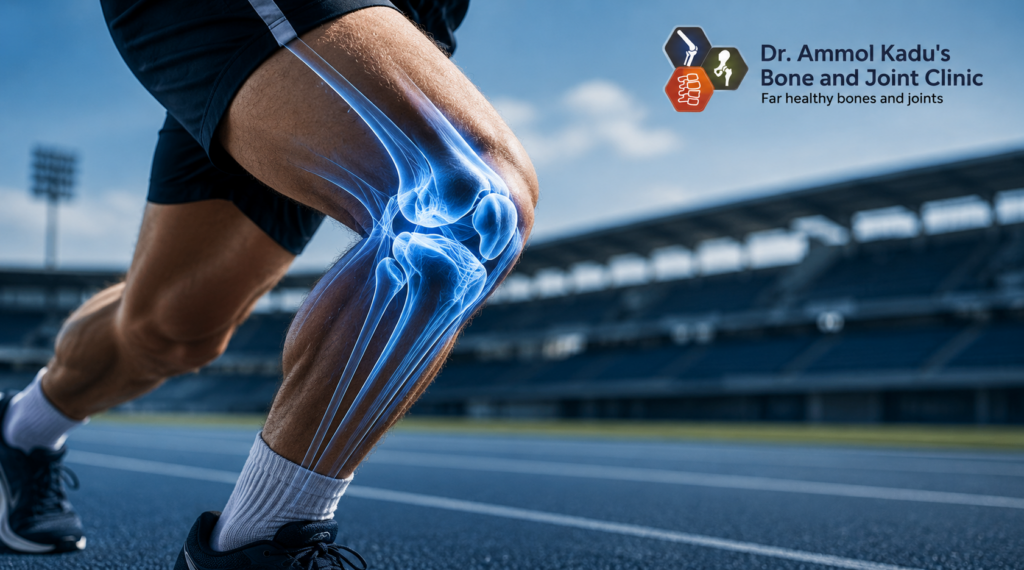
Sport puts constant strain on the knee — sprinting, jumping, fielding, and sudden stops all take a toll. Here’s what actually happens when it gets injured:
- Ligament Tears (ACL/MCL Injuries)
Sudden twists or awkward landings during sprints and jumps can tear the stabilizing ligaments, often causing a pop, swelling, and instant instability. - Meniscus Tears
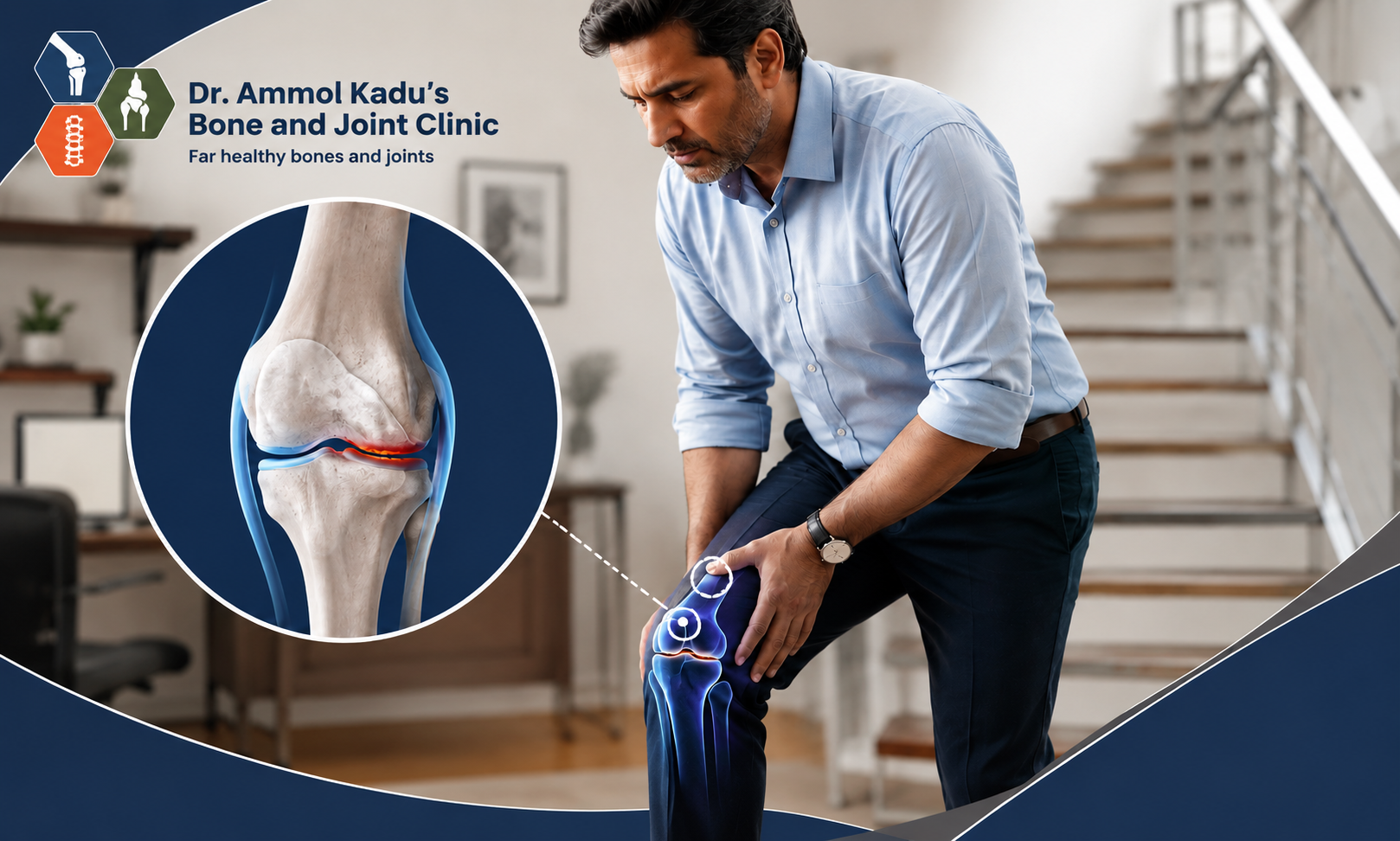
Quick pivots or repeated squatting in sports like tennis or wrestling can tear the knee’s cartilage cushion, later showing up as stiffness or locking mid-play. - Cartilage Wear and Early Arthritis
Years of high-impact play wear down cartilage, causing bone-on-bone friction — a common reason athletes develop early arthritis. - Knee Swelling
A hard fall or collision triggers fluid build-up to protect the joint — exactly what happened to Bumrah, whose left knee developed reactive swelling after a fielding impact, ruling him out of the very next match. - Knee Fractures
Direct impact from a tackle or fall can crack the bones around the knee, causing sharp pain and swelling that need urgent medical care.
It’s Not Just an Athlete’s Problem
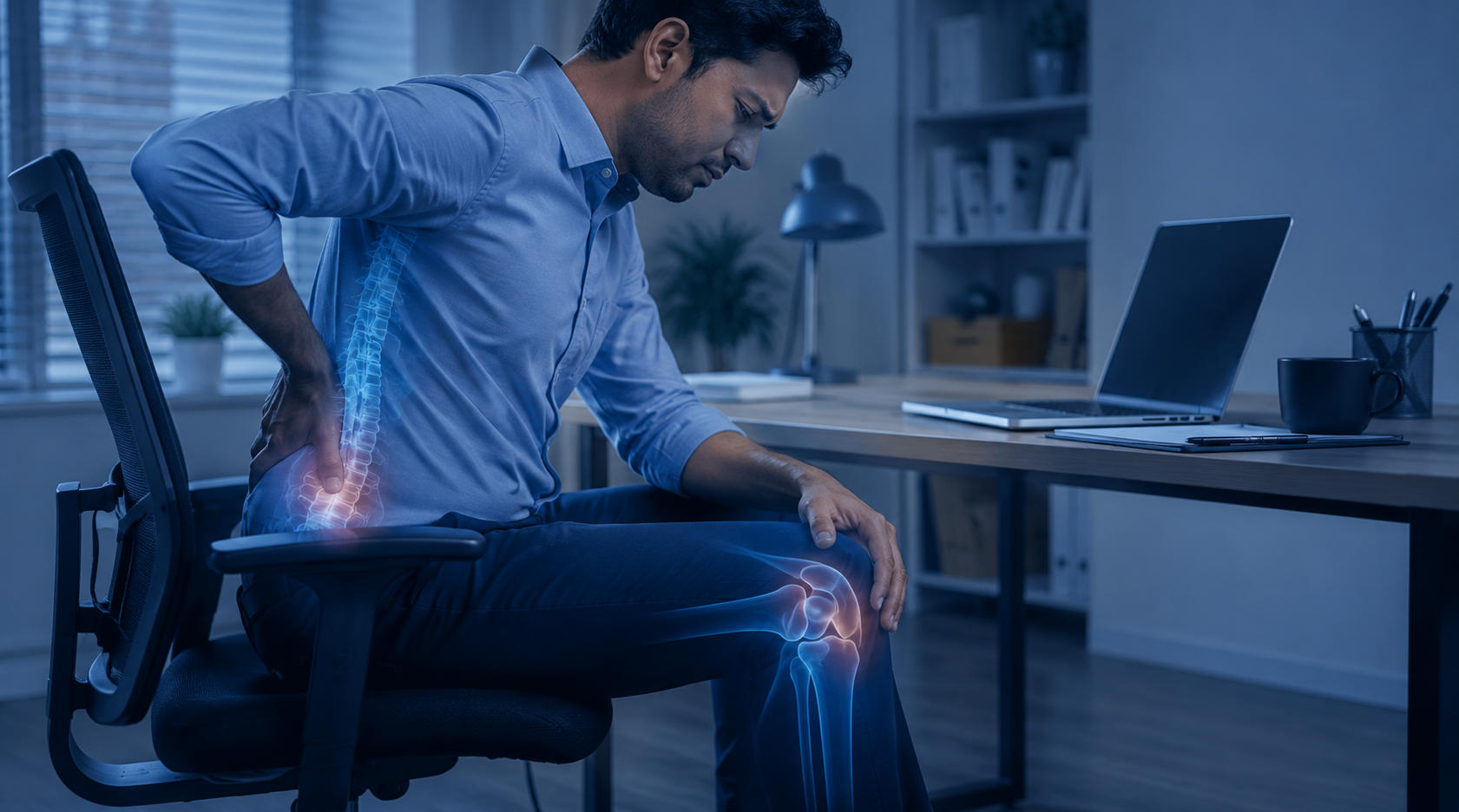
Knee pain isn’t only a sportsperson’s issue. It affects everyday people too – a homemaker climbing stairs all day, someone sitting at a desk for hours, or an elderly parent struggling to stand up. The causes are usually simple: age, extra weight, lack of movement, or an old injury that was never treated. Left unattended, this pain can slowly affect daily life. That’s why timely knee pain treatment matters just as much for regular people as it does for athletes.
Why These Knee Injuries Keep Happening
Most sports-related knee injuries develop because of repeated stress rather than a single incident. Understanding the common causes can help athletes reduce their risk.
- Overuse – Frequent training and matches without enough recovery gradually overload the knee joint.
- Sudden Twisting or Impact – Quick pivots, awkward landings, or direct collisions can damage ligaments and cartilage.
- High-Impact Sports – Activities involving running, jumping, and rapid direction changes place continuous stress on the knee.
- Previous Knee Injuries – Returning to sports before an injury has fully healed increases the risk of reinjury.
Lessons from Real Sporting Incidents
Bumrah’s case is a good real-world example of how these injuries unfold. He sustained the impact injury to his left knee while fielding in the second ODI at Cardiff, and by the next day, reactive swelling had built up enough that the BCCI ruled him out of the series decider at Lord’s. The team’s response was standard and sensible – rest, monitoring, and a cautious return once the swelling settled, rather than risking a bigger problem by rushing back. This kind of case shows exactly why knee pain treatment should never be delayed, even when the injury looks “minor” on the surface.
Treatment or Surgery? Knowing When Your Knee Needs More
Most knee pain – even the kind athletes deal with after a hard match – doesn’t automatically call for surgery. A sprain, some stiffness, or a niggle from sports usually responds well to proper knee pain treatment: rest, physiotherapy, and gradual strengthening. If it’s working, the pain eases over time and stays away once you’re back to normal.
Sometimes, though, the knee just won’t bounce back, no matter how consistent the treatment is. This usually points to cartilage worn down over the years, or an old sports injury that never fully healed. Once walking, climbing stairs, or even sleeping starts feeling harder rather than easier, treatment alone often isn’t enough and that’s the point to talk to a doctor about knee replacement surgery, partial or total, depending on how much of the joint is affected.
Age isn’t really the deciding factor. Younger athletes with severe injuries sometimes need it, while many older adults manage fine without it. If you’re in Nagpur reaching this stage, it’s worth getting evaluated for knee replacement treatment.
Early Warning Signs You Should Never Ignore
The cost of knee replacement surgery in Nagpur is influenced by multiple factors, including the surgical approach, implant quality, hospital stay, and recovery plan. A comprehensive consultation ensures an accurate estimate tailored to your treatment needs.
- Persistent Pain – Pain that continues during or after physical activity instead of improving with rest.
- Swelling or Stiffness – Ongoing swelling or difficulty bending and straightening the knee.
- Instability or Locking – The knee feels unstable, gives way, or locks during movement.
- Reduced Performance – Difficulty running, jumping, climbing stairs, or performing everyday activities comfortably.
Precautions That Keep Players on the Field
Although not every injury can be avoided, healthy training habits can significantly lower the risk.
- Warm Up Before Every Activity – Prepare your muscles and joints before training or competition.
- Build Strength and Flexibility – Regular conditioning helps improve knee stability and overall performance.
- Wear the Right Sports Equipment – Proper footwear and protective gear reduce unnecessary stress on the knee.
- Follow a Safe Training Plan – Gradually increase training intensity and allow adequate recovery between sessions.
How Nagpur’s Athletes Can Recover the Right Way
Players and sports enthusiasts in Nagpur don’t need to travel far for expert care. Dr. Ammol Kadu, recognized as one of the best knee specialists in Nagpur, offers complete knee pain treatment and knee injury recovery, guiding athletes from diagnosis through rehabilitation.
- Knee Pain Treatment in Nagpur – Personalized care plans for both sudden injuries and long-term knee pain.
- Knee Fracture Treatment – Quick, accurate treatment for fractures, ideal for urgent sports injuries.
- Knee Injury Recovery – Step-by-step rehabilitation support to help athletes safely return to play.
- Total Knee Replacement Surgery in Nagpur – Minimally invasive, robotic-assisted surgery for cases where conservative treatment isn’t enough, helping patients return to an active life with less pain and faster recovery.
FAQs:
Q1. How to reduce knee pain after sports?
Rest, ice application, gentle stretching, and avoiding high-impact activity for a few days can help reduce knee pain after sports. If pain persists beyond a couple of days, it’s best to get it checked by a specialist.
Q2. Is knee pain common in sports?
Yes, knee pain is very common among athletes due to the repetitive stress, impact, and sudden movements involved in most sports, especially running, jumping, and pivoting-based games.
Q3. How to find a good knee specialist for sports injuries?
Look for a doctor with sports-injury experience, minimally invasive treatment options, and a track record of helping athletes return to play quickly and safely.
Q4. Do all knee injuries need surgery?
No, many knee injuries can be treated with rest, physiotherapy, and medication. Surgery is only recommended when conservative treatment doesn’t relieve the pain or restore function.
Q5. What is the success rate of knee replacement surgery?
Knee replacement surgery has a success rate of over 90–95%, with most patients experiencing significant pain relief and improved mobility.
Q6. How do I know if I need a total or partial knee replacement?
Your surgeon will assess this using X-rays or an MRI. If only one part of the knee is damaged, a partial replacement may be enough; widespread damage usually requires a total replacement.
Q7. How much does knee replacement surgery cost in India?
Knee replacement costs vary by city, hospital, implant type, and surgical technique (traditional vs. robotic-assisted), so it’s best to get a personalized quote after consultation
Conclusion:
Even someone as fit as Jasprit Bumrah can be stopped in his tracks by a sudden knee injury. That’s the thing about knee pain — it doesn’t always come with a big fall or a loud pop. Sometimes it’s just a little stiffness you keep ignoring, until one day it costs you something big, whether that’s a match or simply your ability to move freely. And this isn’t just about athletes. Anyone can go through this — someone struggling to climb stairs, sitting too long at a desk, or just getting older. The knee doesn’t care who you are; if it’s hurting, it needs attention. The good news is, if you catch it early and get the right treatment, recovery is usually quick and easy. But if it’s ignored for too long, it can turn into something bigger, even needing knee replacement surgery. So whether you’re a player or just someone dealing with everyday knee pain, don’t wait it out — getting it checked early always makes things easier.
Ready to Get Your Knees Checked?
If you’re dealing with knee pain, a nagging knee injury, or thinking about knee replacement surgery, don’t wait for it to get worse. Book a consultation with Dr. Ammol Kadu’s Clinic in Nagpur today and take the first step toward pain-free movement.
📍 G-9, Pramod Rajshree Plaza, Khamla Rd, near Hanuman Mandir, Khamla, Nagpur, Maharashtra 440025
☎ +91 74472 27666
📧 amolkadu111@gmail.com
🌐 dramolkadu.com