By Dr. Ammol Kadu | MS Orthopedics, 20+ Years Experience | Faculty Member, NAC25 | Best Orthopedic Surgeon in Nagpur
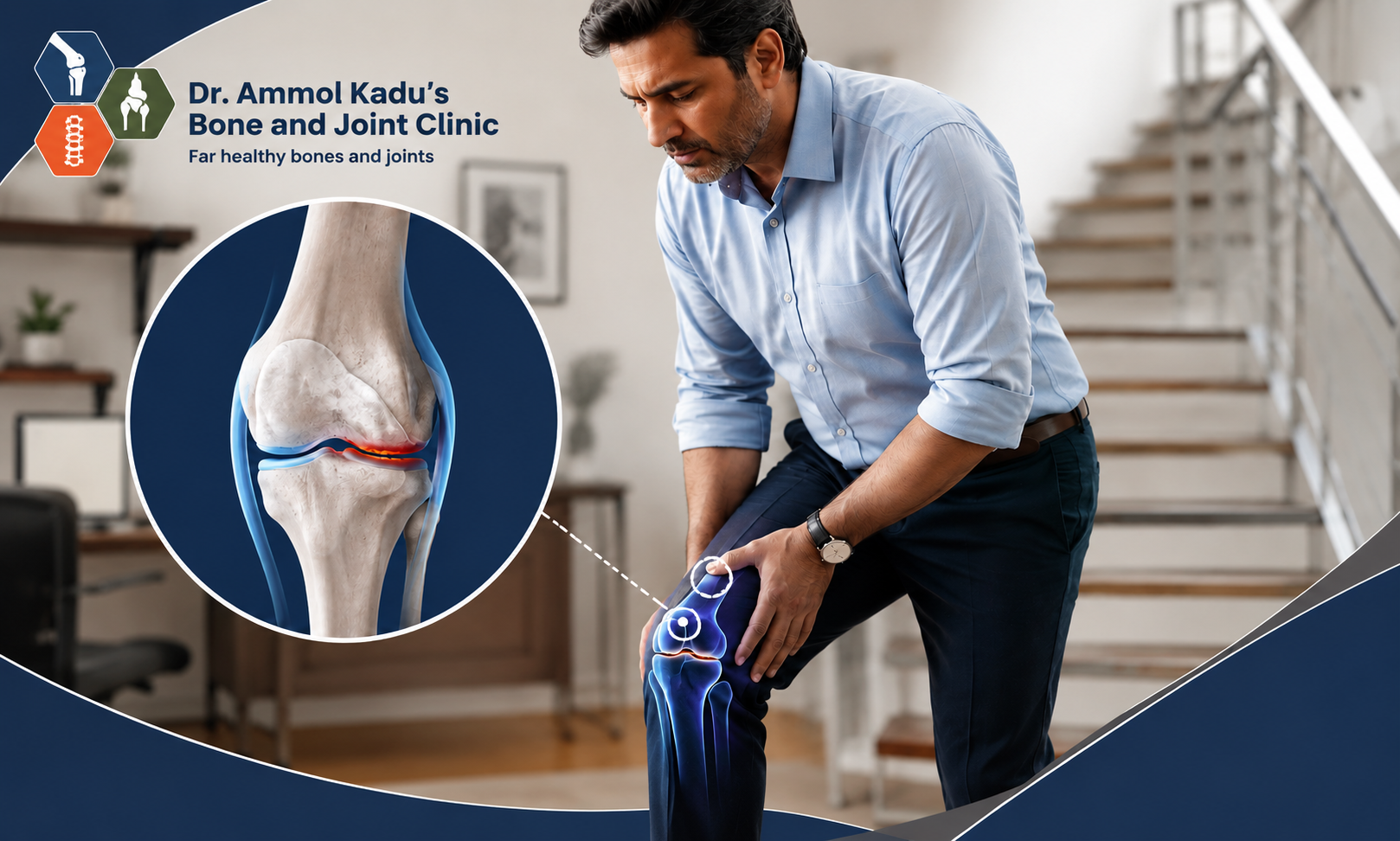
Think about how many times you bend your knee in a single day — walking to the kitchen, climbing a flight of stairs, sitting down for a meal, or simply getting up from a chair. Most of us never notice this movement until pain, stiffness, or a grinding sensation in the knee makes even the smallest task feel impossible. For people living with severe knee arthritis or a joint that’s been damaged beyond repair, this daily struggle can become exhausting. This is exactly where Total Knee Replacement in Nagpur offers a reliable path back to a pain-free, functional life.
What Is Total Knee Replacement?
Total Knee Replacement is a surgical procedure where a damaged knee joint is replaced with an artificial implant made of metal and plastic components. The surgery restores smooth movement by replacing the ends of the femur (thigh bone) and tibia (shin bone) that meet at the knee joint. It is typically recommended when the joint has been severely affected by arthritis, fractures, or long-term wear that no longer responds to medication or physiotherapy. This procedure is also known as total knee arthroplasty.
In some cases where the damage is limited to a specific part of the joint, surgeons may recommend partial knee replacement as an alternative option, involving resurfacing of only the damaged compartment rather than a complete joint replacement. The choice between the two depends on the extent of joint damage, which is determined by the surgeon during diagnosis.
Who Needs This Surgery?
Not every case of knee pain requires surgery. Doctors usually consider this option for patients who experience:
- Constant knee pain that interferes with sleep and daily activities
- Severe stiffness limiting leg movement
- Visible deformity or instability in the joint
- Rheumatoid arthritis or osteoarthritis affecting the knee
- Complex fractures that cannot be repaired with plates or screws
If pain relievers, injections, and physiotherapy no longer help, a knee joint replacement surgery consultation becomes necessary. For many patients, seeking timely knee pain treatment in Nagpur early on can also help determine whether surgery is truly the right next step.
Knee Replacement in Nagpur: Why Location Matters
Choosing the right city and hospital for this surgery plays a major role in the outcome. For patients considering Knee Replacement in Nagpur, the city now offers access to skilled orthopedic surgeons, modern operation theatres, and advanced implants that were once available only in metro cities. Patients no longer need to travel to distant locations for specialized joint care, as Nagpur’s healthcare infrastructure has grown to support complex orthopedic procedures with the same precision and safety standards.
The success of knee replacement surgery in Nagpur depends on the surgeon’s expertise, modern surgical techniques, and a structured rehabilitation program that supports long-term joint function and mobility.
The Surgical Procedure in Knee Replacement
Total Knee Replacement is performed under anesthesia and typically takes one to two hours, depending on joint condition and implant type.
- Damaged bone and cartilage are carefully removed from the joint
- Artificial components are fitted into the femur and tibia
- Implants are secured using bone cement or a press-fit method
- Real-time imaging may be used to check implant alignment
- The incision is closed and initial mobility is assessed post-surgery
Recovery
Recovery depends on age, health, and adherence to post-op care, with most patients regaining full function within a few months.
- A walker or support device assists movement during the first few weeks
- Physiotherapy begins early to prevent stiffness
- Light daily tasks resume within 4–6 weeks
- Complete recovery is generally seen in 3–6 months
- Skipping physiotherapy sessions can slow long-term results
Understanding the typical knee replacement recovery time in advance helps patients plan their routine and stay committed to physiotherapy, guided by regular clinic follow-ups, for the best long-term outcome
Cost Considerations
The cost of knee replacement surgery in Nagpur is influenced by multiple factors, including the surgical approach, implant quality, hospital stay, and recovery plan. A comprehensive consultation ensures an accurate estimate tailored to your treatment needs.
- Implant brand and material affect overall pricing
- Room category and hospital facilities influence total cost
- Diagnostic tests add to pre-surgery expenses
- Surgeon’s experience can impact consultation fees
- Post-surgery physiotherapy sessions may be billed separately
Risks and Precautions
Knee replacement surgery is generally considered safe, but understanding the potential risks and following the recommended precautions are important for achieving the best possible recovery and long-term knee function
| Risks | Precautions |
|---|---|
Infection at the surgical site | Sterile surgical protocols and antibiotic care |
Implant loosening over time | Correct implant technique matched to bone quality |
Nerve-related irritation or numbness | Regular post-op monitoring of nerve function |
Blood clots in the leg | Encouraging early, gentle movement after surgery |
Stiffness or reduced range of motion | Timely, consistent physiotherapy |
FAQs:
Q1.What are the common signs that indicate you may need knee replacement surgery?
Persistent knee pain while walking or climbing stairs, ongoing stiffness, visible swelling, and reduced mobility despite treatment are signs worth discussing with a surgeon.
Q2. Is knee replacement surgery painful?
The procedure is performed under anesthesia, so patients feel no pain during surgery. Some discomfort during early recovery is normal but is well managed with medication and eases with physiotherapy..
Q3.Can both knees be replaced at the same time?
In most cases, surgeons recommend replacing one knee at a time. This approach allows for safer recovery, easier rehabilitation, and reduces the risk of complications during the
Q4. Who is eligible for knee replacement surgery?
There is no fixed age limit for knee replacement surgery. Eligibility depends on the severity of joint damage, overall health, bone quality, symptoms, and whether non-surgical treatments have failed to provide adequate relief.
Q5. Is physiotherapy necessary after knee replacement surgery?
Yes. Physiotherapy is an essential part of recovery after knee replacement surgery. A structured rehabilitation program helps restore strength, improve flexibility, increase range of motion, and support long-term joint function.
Conclusion:
You don’t have to live with knee pain forever. Thanks to today’s advances, effective knee pain treatment is closer than you think. Whether you want to understand the surgery, know what recovery feels like, or find the right option for knee replacement in Nagpur, having the right information makes all the difference. A good first step is simply talking to an experienced surgeon like Dr. Ammol Kadu at a trusted orthopedic clinic in Nagpur — your knee, and your everyday movements, deserve that care
When to Seek Expert Help
If knee pain or stiffness is affecting your daily life, don’t wait for it to worsen. Early consultation leads to better outcomes.
Book an appointment for a consultation or visit dramolkadu.com to explore our knee and orthopedic care programs in Nagpur.
📍 G-9, Pramod Rajshree Plaza, Khamla Rd, near Hanuman Mandir, Khamla, Nagpur, Maharashtra 440025
☎ +91 74472 27666
📧 amolkadu111@gmail.com
🌐 dramolkadu.com
Related reads:
▪ Partial Knee Replacement: Is It Right for You?